
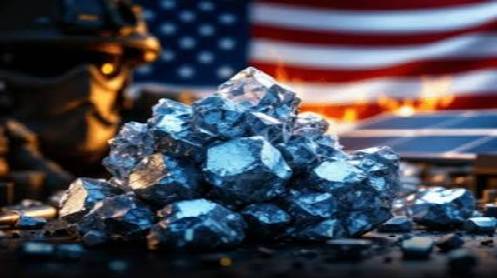
ISLAMABAD: Pakistan’s mineral wealth is estimated at $6 trillion to $8 trillion, according to government-affiliated estimates cited in a recent policy analysis by the Pakistan Institute of Development Economics (PIDE), which calls for a shift from raw material extraction to domestic processing and industrial value addition.
The report, titled “The New Mineral Geopolitics: Why Pakistan Must Move Beyond Extraction,” examines the growing global competition for critical minerals and the opportunities and challenges facing Pakistan.
Pakistan’s mineral potential spans nearly 600,000 square kilometres and includes 92 known minerals, of which 52 are commercially extracted. Despite this resource base, the mining sector has historically contributed less than 3% to the country’s gross domestic product (GDP).
One of the country’s most significant assets is the Reko Diq copper-gold project in Balochistan, considered one of the world’s largest undeveloped deposits of its kind. The project contains an estimated 5.9 billion tonnes of ore, with commercial production targeted to begin by 2028.
Initial annual copper production is projected at 200,000 tonnes, potentially increasing to 400,000 tonnes following expansion. The project is expected to generate approximately $2.8 billion in annual exports and more than $70 billion in free cash flow over its projected 37-year operational life.
Pakistan also has potential deposits of critical minerals, with geological surveys identifying at least 12 of the 17 rare earth elements, alongside lithium-bearing pegmatites, chromite, beryllium and zircon.
However, the PIDE analysis stresses that mineral extraction alone will not enable Pakistan to maximise the economic and strategic benefits of its resources. Greater value lies in refining, processing and manufacturing, where China maintains a dominant position in global supply chains.
According to the International Energy Agency’s Global Critical Minerals Outlook 2025, China leads the refining of 19 out of 20 strategic minerals, with an average market share of around 70%. Its dominance is particularly pronounced in gallium, graphite and manganese, where its respective shares stand at 98.7%, 95.2% and 95%.
The report identifies regulatory fragmentation as a major obstacle to developing Pakistan’s domestic mineral-processing industry. The 18th Constitutional Amendment devolved authority over mineral resources to the provinces, while trade, investment and industrial policy largely remain federal responsibilities, creating coordination challenges and regulatory uncertainty.
The country’s investment climate has also been affected by the dispute involving the Tethyan Copper Company. In 2019, an International Centre for Settlement of Investment Disputes (ICSID) tribunal awarded approximately $5.9 billion in damages against Pakistan after the Balochistan government refused a mining lease in 2011.
Other constraints include high electricity tariffs, limited access to domestic processing technologies and increasingly stringent international environmental standards.
The analysis underscores the need for Pakistan to develop local refining and processing capacity, strengthen coordination between federal and provincial governments, and attract investment in mineral-based industries. Such measures could help the country move beyond exporting unprocessed resources towards higher-value manufacturing, greater export earnings and a stronger position in global critical mineral supply chains.
Story by Kasim Abbasi